For the first time in months, procurement teams got a piece of news they’ve been waiting for.
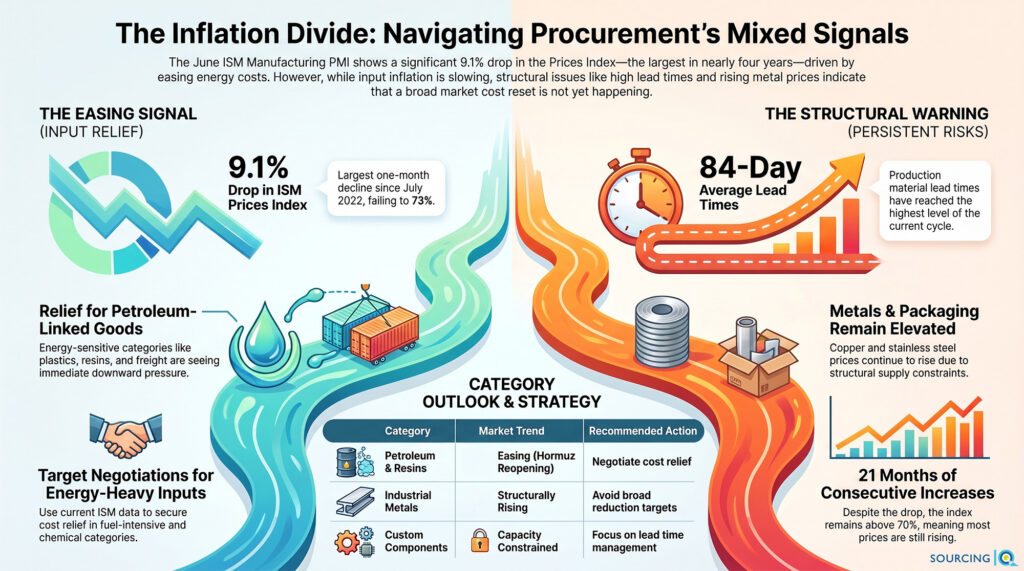
The June ISM Manufacturing PMI showed the Prices Index falling 9.1 percentage points, the largest one-month decline since July 2022.
At first glance, that’s exactly what manufacturers have been hoping to see. Energy costs are easing. The Strait of Hormuz is reopening faster than expected. Brent crude has drifted back toward pre-conflict levels.
So does this mean procurement costs are finally normalizing?
Not quite.
While the latest ISM report carries good news, it also carries a warning worth taking seriously: input cost inflation is slowing, but structural cost inflation is not. For procurement leaders, understanding that distinction may be one of the more useful competitive edges heading into the second half of 2026.
The ISM Prices Index Finally Turned
The headline deserves attention. The ISM Manufacturing Prices Index fell from 82.1% to 73%, the largest monthly decline in nearly four years. That confirms what many procurement teams have already started seeing in petroleum-linked categories: fuel costs easing, petrochemical pressure softening, and the Hormuz agreement beginning to work its way into portions of the manufacturing economy.
That’s real progress. It’s also only part of the picture.
The Prices Index remains above 70%, which means most manufacturers are still paying higher prices than the month before. June marked the 21st consecutive month of manufacturing price increases.
The direction improved. The destination hasn’t changed.
The Headline Improved. The Fundamentals Didn’t.
The easiest mistake procurement teams can make right now is treating lower oil prices as evidence that every supplier cost should return to February pricing. One ISM survey respondent said exactly that. The data underneath the headline says otherwise.
Production material lead times increased again, reaching 84 days, the highest of the current cycle. No manufacturing industry reported faster supplier deliveries. Electronic components remained in short supply. Copper kept rising. Stainless steel kept rising. Corrugated packaging kept rising.
Those aren’t signs of a broad cost reset. They’re signs of a procurement environment getting more selective. Some categories are easing. Others remain structurally constrained. Treating this month’s number as a green light across the board is how you end up with a negotiation strategy that doesn’t match reality.
Why Category-Level Procurement Matters Right Now
The recurring theme in this series has been separating temporary disruption from structural change. This week’s data is a clean example of why that distinction matters.
Petroleum-linked categories. If you’re buying plastics, resins, chemicals, fuel-intensive freight, or petroleum-derived materials, this is the moment to bring cost relief conversations to suppliers. The ISM data gives you objective support for that discussion.
Metals. Copper, stainless steel, and other industrial metals are telling a different story entirely. Copper has now appeared on the ISM “up in price” list for twelve consecutive months. Stainless steel has stayed elevated for five. These markets are responding to structural supply conditions, not oil prices. Using this month’s headline to negotiate broad metals reductions isn’t going to land, and trying it will just cost you credibility with the supplier.
Domestic manufacturing. Lead times remain elevated despite easing energy markets. If you’re buying machined components, fabricated assemblies, custom manufacturing, or engineered products, capacity, not commodity pricing, is still the bigger risk in your plan.
July May Be the Most Important Tariff Month of the Year
Section 122 expires on July 24. If no successor action is finalized before then, many imported products currently carrying the temporary 15% surcharge could briefly revert to standard Most Favored Nation tariff rates before any replacement measure takes effect.
That’s a planning problem, not a guessing game. Nobody knows exactly what Washington will do. What procurement teams can control is understanding their exposure across multiple scenarios before the deadline arrives. Waiting until the last week of July to model tariff outcomes isn’t a strategy anymore. It’s a bet.
Hormuz Is Recovering Faster Than Expected, But the Risk Premium Should Stay
There’s genuine progress in the Strait. Daily vessel traffic has picked up. Commercial shipping is returning. Energy prices have eased significantly from wartime peaks.
That matters. So does this: Iran has publicly asserted continuing authority over Hormuz, and negotiations over long-term governance remain unresolved once the initial toll-free period expires.
For procurement planning, that changes the assumption. Instead of treating Hormuz as either “closed” or “back to normal,” it’s more accurate now to treat it as a permanently higher-risk shipping corridor. That doesn’t necessarily mean sharply higher costs going forward. It does mean freight models should keep carrying a geopolitical risk premium rather than reverting to pre-conflict assumptions.
What Procurement Teams Should Do This Week
Use falling energy costs where they’re real. Bring the ISM data into negotiations on petroleum-linked inputs, freight surcharges, and fuel-sensitive categories. The data backs you up.
Avoid broad cost-reset assumptions. Not every supplier experienced the same relief. Separate energy-driven inflation from structural inflation before you sit down at the table.
Keep watching lead times. Capacity is tighter than a lot of leadership teams realize. Production material lead times are still climbing even as energy markets improve.
Finish your July tariff planning now. The Section 122 deadline is measured in days, not months. Get import classification reviews done, model post-July scenarios, and get in front of your customs advisors before this becomes urgent instead of important.
The Bottom Line
The June ISM report is encouraging. It confirms that one meaningful layer of inflation, the energy shock triggered by the Hormuz conflict, is starting to unwind. That’s worth acknowledging.
It’s not a signal that manufacturing costs are heading back to where they were six months ago. Containerboard is still elevated. Copper is still elevated. Stainless is still elevated. Lead times are still elevated. Supplier capacity is still constrained.
The procurement teams that come out ahead over the next six months won’t be the ones celebrating a single good data point. They’ll be the ones using that data precisely, capturing savings where conditions have genuinely improved while continuing to manage the structural costs that haven’t gone anywhere.
That’s the difference between reacting to a headline and managing procurement like it’s actually your job.